Dr. Boozman's Check-up
Slam the Scam
Mar 05 2026
Some of the most discouraging stories that reach my office relate to scams. It is disturbing to see countless schemes designed to steal rom Arkansans, and the cascade of problems people often suffer as a result.
Unfortunately, we often hear from victims only after the crime is already underway or complete. This might be when a person needs to change a bank account after their Social Security check was stolen, or the IRS hasn’t released their tax refund because someone else already filed with their information, or a disabled veteran is notified they are losing benefits because the VA thinks they are working full-time.
Sadly, these situations force the defrauded party to prove their identity and navigate a bureaucratic maze, file police reports and clear other hurdles to get things straightened out. This is frustrating and difficult for anyone, but especially the elderly and others who are more vulnerable.
But senior citizens are not the only ones who fall prey to these attacks. The Federal Trade Commission (FTC) reported in 2024 that Americans lost more than $5.7 billion to investment scams and almost $2.95 billion to imposter scams.
In our increasingly online society, it is all too easy for criminals to create false identities or pose as a trusted friend as they continue to grow more sophisticated in their tactics. For example, it can be tough to detect a fake caller using A.I. to imitate a particular accent or even pretend to be someone you know. In addition, the number of scams involving social media has skyrocketed in recent years.
Despite this frustrating reality, there are still concrete steps you can take to help protect yourself online and on the phone.
Officials with the Social Security Administration point to four basic indications that a call, text or email is a scam. Fraudsters often:
- Pretend to be from an agency or organization.
- Say there is a problem or prize.
- Pressure you to act immediately.
- Tell you to pay in a specific way.
It is also important to note scammers don’t just pretend to be government agencies. On social media, they are likely to reach out like a friend or someone who wants to do business with you. My office regularly works cases where the victim met someone on social media and became wrapped up in a romantic ploy or were convinced to invest money in an unfamiliar way, like international currency trading. For the most part, if the situation sounds particularly outrageous and heart-wrenching, or too good to be true, that should raise suspicions about the requestor’s motives and prompt further vetting.
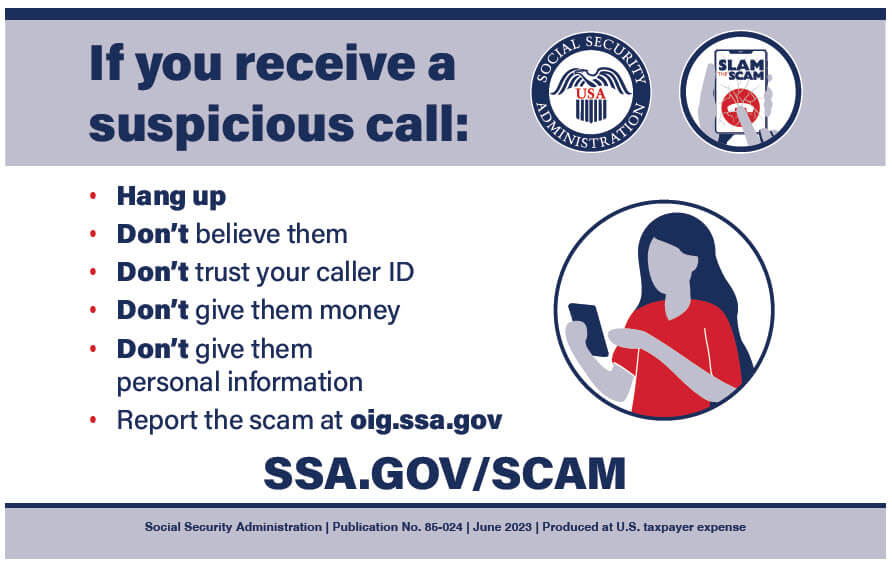
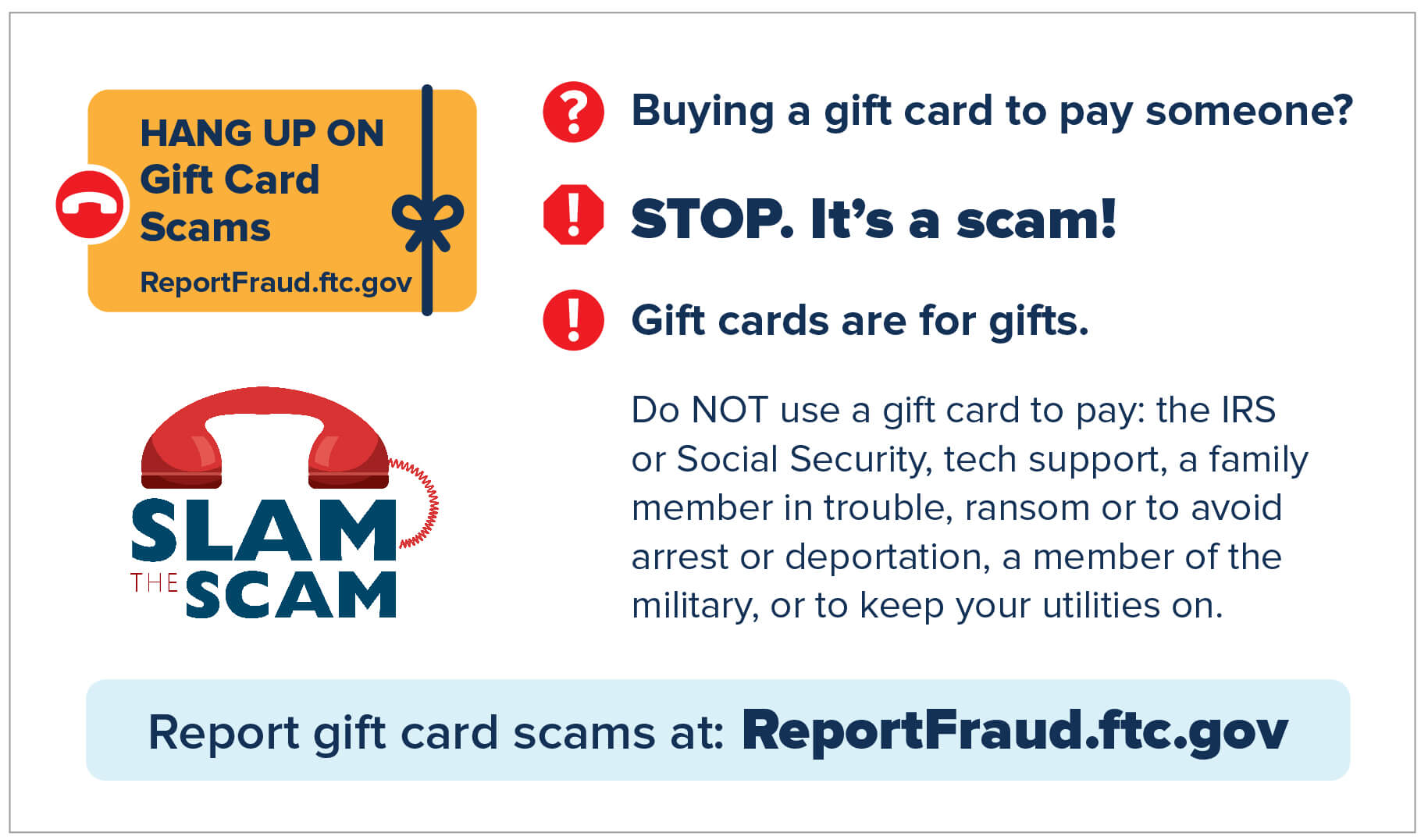
The right action to take in most situations is to hang up or refuse to respond. Don’t believe people who call you unexpectedly with urgent demands. Don’t unquestionably trust your caller ID and know that scammers can “spoof” real entities. Don’t give anyone money or personal information. Also, if you suspect a scam, report it.
Social Security Administration officials are raising awareness about these issues in their annual Slam the Scam campaign. You can find more useful information to identify and report potential scams on their website https://www.ssa.gov/scam/ or to the Federal Trade Commission https://reportfraud.ftc.gov/.